
Best Practice – Celebration of World Nature Conservation Day – Presentation on Assessing Public Awareness and Attitudes Towards Nature Conservation
Best Practice – Celebration of World Nature Conservation Day – Presentation on Assessing Public Awareness and Attitudes Towards Nature Conservation
The Department of Studies in Business Administration, Pooja Bhagavat Memorial Mahajana Education Centre has been instrumental in adapting Best Practices.
Purpose & Scope
The event was organized in recognition of World Nature Conservation Day, aiming to explore and assess the current level of public awareness and attitudes toward nature conservation. The purpose was to engage the audience in understanding the importance of conserving natural resources and to evaluate how well the public is informed about ongoing conservation efforts. Additionally, the event sought to identify gaps in knowledge and attitudes that could be addressed through targeted educational campaigns and policy interventions. The scope extended to analyzing the effectiveness of current conservation strategies and understanding the public’s willingness to participate in such efforts.
The Brief of the Event
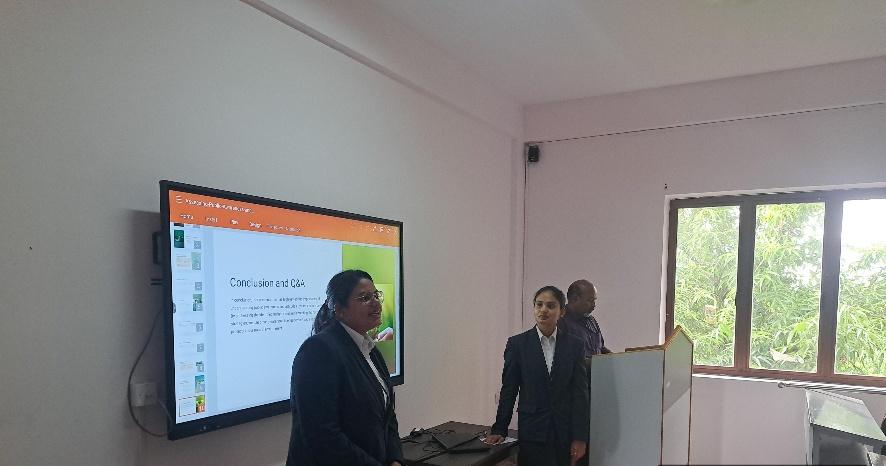
On World Nature Conservation Day, second-year MBA students Prathima M P and Bhoomika H S delivered a comprehensive presentation titled “Assessing Public Awareness and Attitudes Towards Nature Conservation.” The presentation was a key event aimed at highlighting the significance of nature conservation and understanding the public’s perception of ongoing efforts in this domain. The session attracted an audience of 60 participants, including students, faculty members, and guests.
The presentation commenced with a clear definition of nature conservation, described as the protection and sustainable management of natural resources. The speakers emphasized the critical importance of these efforts in preserving biodiversity, mitigating climate change, and ensuring the well-being of current and future generations. They also highlighted significant challenges facing conservation efforts, such as habitat loss, pollution, and the adverse impacts of climate change.
To provide a robust assessment of public awareness and attitudes, Prathima and Bhoomika employed a mixed-methods research approach. They conducted surveys, interviews, and focus groups, ensuring a diverse and representative sample. The survey was meticulously designed, incorporating multiple choice, Likert scale, and open-ended questions. These questions covered key aspects such as the level of awareness, prevailing attitudes, and the public’s willingness to actively engage in conservation initiatives.
One of the critical findings presented was the general awareness of the need for environmental protection and sustainable development among the public. However, the presentation also uncovered significant gaps in knowledge and a lack of proactive engagement in conservation efforts. The speakers emphasized the need for more intensive educational campaigns and the creation of opportunities for public participation in conservation activities.
The presentation concluded with a call to action, urging attendees to not only become more aware of conservation issues but also to take an active role in promoting and participating in efforts to protect the environment. The event was well-received, with engaging discussions following the presentation, highlighting the relevance and timeliness of the topic.
Target Audience:
60 Participants attended the event, including students, and faculty members.

